
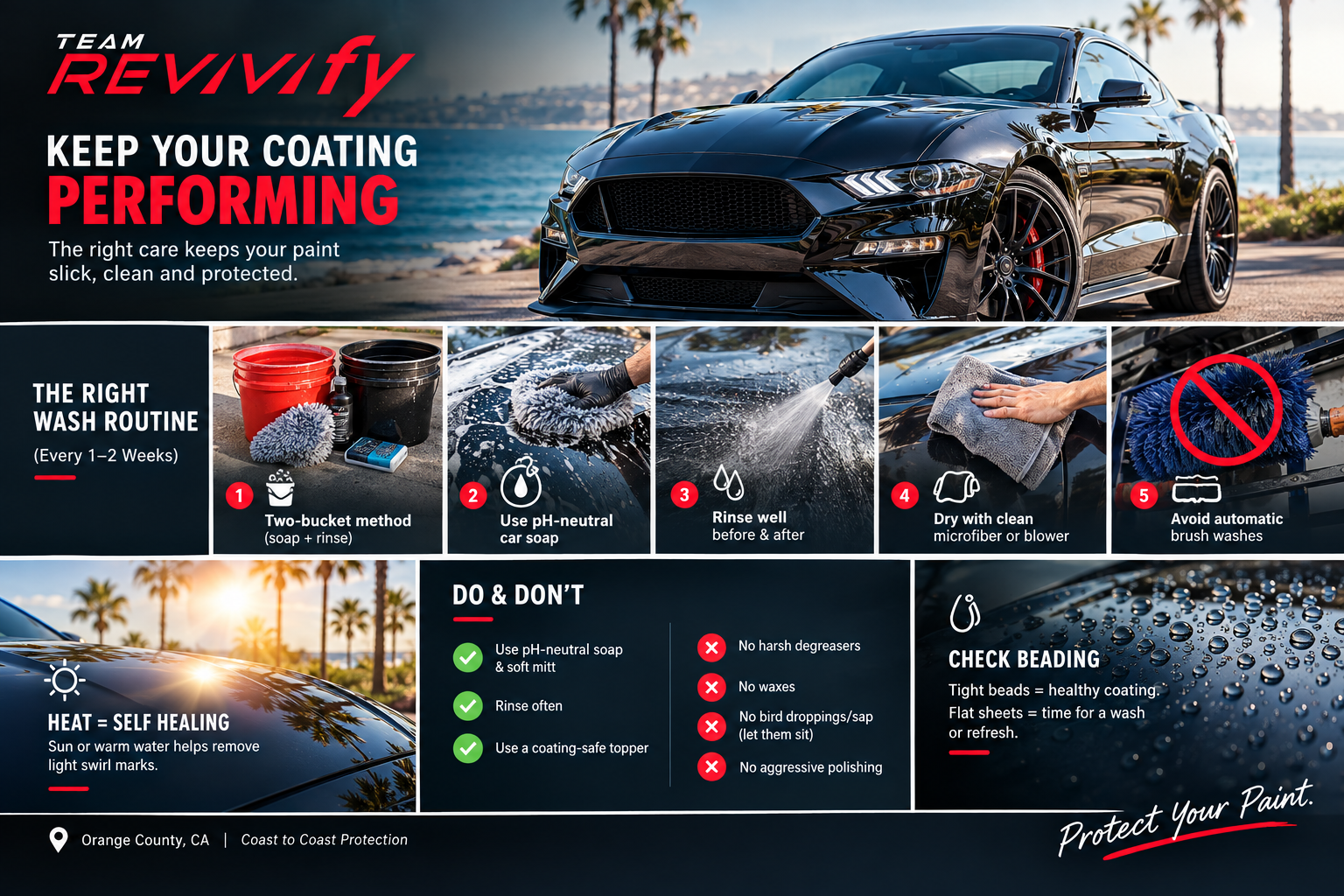
To maintain a self-healing coating, wash the vehicle every one to two weeks with a pH-neutral soap using the two-bucket method, rinse thoroughly before and after, dry with clean microfiber or a filtered blower, and avoid automatic brush washes and harsh degreasers. Self-healing coatings also need heat — sun or warm water — to trigger the process that removes light swirl marks. That's the whole routine.
A coating reduces how much work your paint needs. It doesn't eliminate it. Here's how to get the full lifespan out of one.
Last updated: September 2026
How often should you wash a coated car?
Every one to two weeks for a daily driver, more often near the coast where salt and fallout accumulate. The point of frequent washing on a coated car isn't scrubbing — it's rinsing contaminants off before they have time to bond. Because the surface is slick, most dirt releases with low-pressure water alone.
What soap and method should you use?
Use a dedicated pH-neutral car shampoo. Skip dish soap and anything marketed as a "wax stripper" or heavy degreaser — those strip the coating's surface oils and can shorten its life. Use the two-bucket method (one bucket of soap, one of clean rinse water with a grit guard) so you're not dragging grit back across the paint. A soft microfiber wash mitt is enough; you don't need to press hard on a coated surface.
How does the self-healing part actually work?
Self-healing coatings are elastomeric — they're designed to flex. Light swirl marks and fine wash scratches are shallow deformations in that flexible layer, and applied heat lets the layer relax back to smooth. On a Southern California car, a few hours of direct sun usually does it. In cooler weather, a warm-water rinse over the affected panel achieves the same thing. Deeper scratches that reach the paint won't self-heal — that's still a correction job.
What should you never do to a coated car?
- Automatic brush car washes. The brushes are the single most common cause of swirl marks, and touchless washes often use high-alkaline chemicals that dull the coating.
- Waxing over it. A coating doesn't need wax, and most waxes just sit on top and attract dust. To boost water beading, use a coating-safe topper spray instead.
- Letting bird droppings or sap sit. The coating buys you time, not immunity. Rinse these off within a day or two.
- Aggressive polishing. Polishing removes coating. If a panel looks hazy, try a decontamination wash first before assuming it needs correction.
How do you know when a coating needs attention?
Water behavior is the tell. When a coating is healthy, water pulls into tight beads and sheets off fast. When beading gets lazy and water starts to sit in flat sheets, the surface is contaminated or the top layer is wearing. A decontamination wash often restores it. If it doesn't, it may be time to talk to your installer about a refresh. Revivify coatings are registered through the applicator who installed them, so start there.
Revivify is a Huntington Beach–based coating company serving Orange County vehicles, boats, and aircraft.
FAQ
Can I take a coated car through a touchless car wash?
Occasionally, yes, but the strong chemicals used in many touchless washes can dull a coating over time. A rinseless or traditional hand wash is gentler and keeps the surface performing longer.
How long does a self-healing coating last?
With proper maintenance, professional self-healing coatings are generally rated for multiple years, with the top tier lasting longest. Neglect — especially brush washes and skipped rinses — is what cuts that short.
Do I need to wax a coated car?
No. Wax offers nothing a coating doesn't already do better, and it can interfere with the coating's surface. Use a coating-compatible booster spray if you want to refresh the beading.
What's the fastest way to keep a coating looking new?
Frequent low-pressure rinses. On a slick coated surface, most contamination leaves with water alone, so a quick weekly rinse does most of the work.