
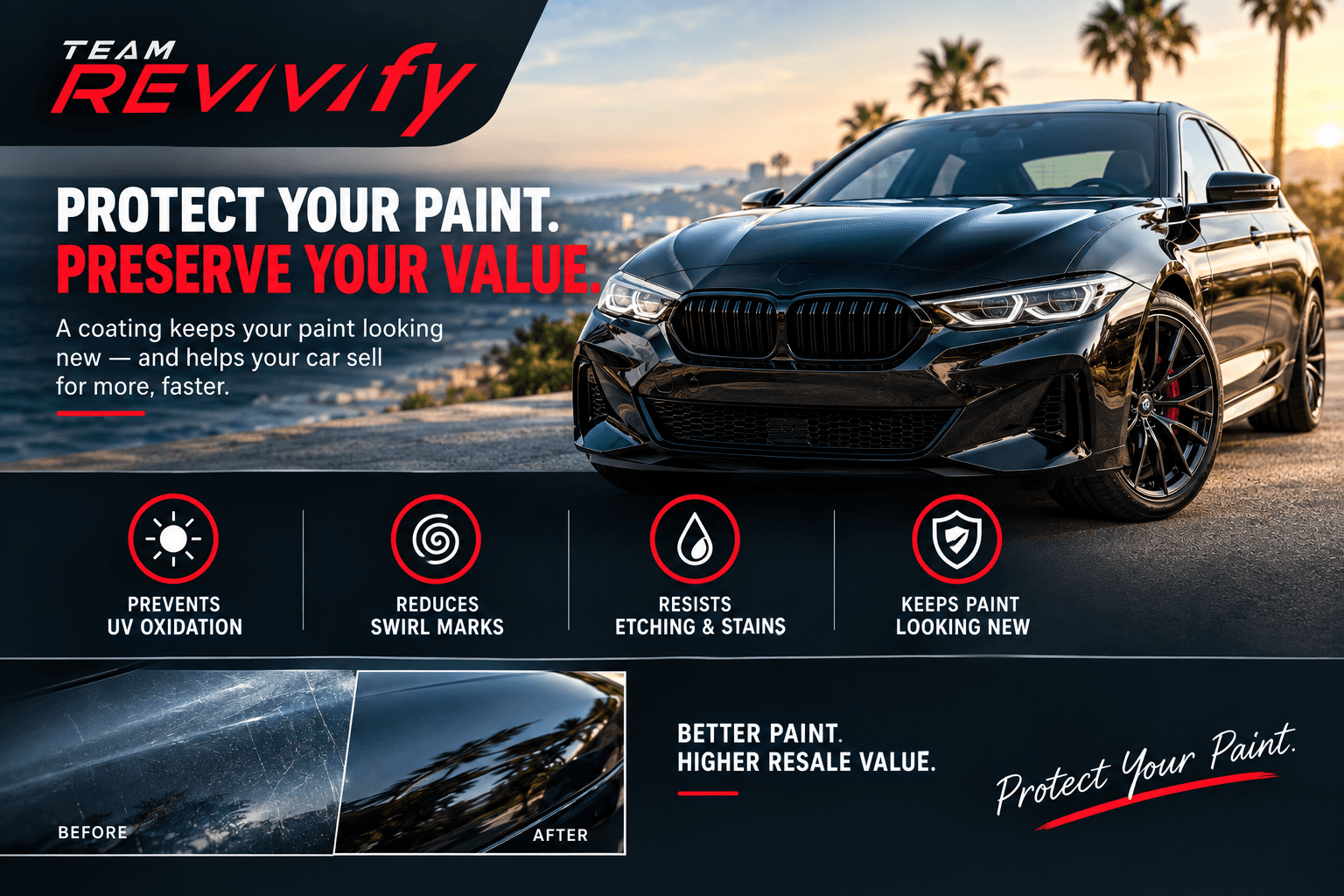
A paint coating protects resale value indirectly but meaningfully: it prevents the oxidation, swirl marks, etching, and staining that drag down a used vehicle's appraised condition. It doesn't add a guaranteed dollar figure, but paint condition is one of the first things a buyer or appraiser judges, and a car with a clean, glossy, well-documented finish sells faster and closer to asking price than an identical car with tired paint.
Last updated: September 2026
How does paint condition affect a car's value?
Appraisal systems and private buyers both grade exterior condition, and paint is the largest visible surface. Faded clear coat, heavy swirl marks, water spots, and bird-dropping etching all push a vehicle down a condition tier — and each tier down can represent a real percentage of the sale price. Two mechanically identical cars can have a noticeable price gap based purely on how the paint reads in person.
What does a coating actually prevent?
- UV oxidation — the chalky, faded look on roofs and hoods of unprotected cars
- Swirl marks — from washing; a self-healing coating removes the light ones with heat
- Chemical etching — from bird droppings, sap, and hard-water spots
- Stain and fallout embedding — the slick surface releases contaminants before they bond
Those are exactly the defects that make paint look "old" regardless of mileage.
Does documentation matter?
It helps. A coating that's recorded — through the installing applicator and, where applicable, reported to vehicle history services — gives a buyer confidence the car was cared for. Revivify coatings are registered through the applicator, and the company has partnered with CARFAX so a professional coating can appear in the vehicle's history record. That paper trail is a small but real trust signal at sale time. More on the approach on the Why Revivify page.
Is a coating a better resale play than PPF?
For most sellers, yes. PPF that has aged — yellowed film, lifted edges, visible seams, or panels where film was removed and clear coat came with it — can actually count against a car at inspection. A well-maintained coating just presents as exceptionally clean paint, with no film artifacts to explain.
When should you coat a car you plan to sell?
As early as possible in your ownership, so the coating protects the paint for the whole time you have it. Coating right before a sale still helps the car present well, but you get far more value protecting the finish for years rather than days. If the paint already has defects, paint correction first is what makes the coating worthwhile.
Revivify is a Huntington Beach coating company serving Orange County drivers, boat owners, and aircraft operators.
FAQ
Will a ceramic or self-healing coating raise my trade-in offer?
Not as a line item. It protects the paint condition that the offer is based on, so a coated, well-kept car tends to land in a higher condition grade than a neglected one.
Do buyers actually notice a coating?
They notice the result — deep gloss, no swirl marks, water beading during a test drive in the rain. Enthusiast buyers often ask directly whether a car is coated.
Does a coating help with a lease return?
It can reduce wear-and-tear charges by preventing the light swirl marks and etching that inspectors flag, but check your lease terms — some cover only specific damage types.
Is it worth coating a high-mileage car?
If the paint is still in good shape and you plan to keep or sell it in a year or more, yes. Mileage doesn't affect how a coating performs — paint condition does.