
Ceramic Wax vs. Ceramic Coating: Why They're Not the Same Thing
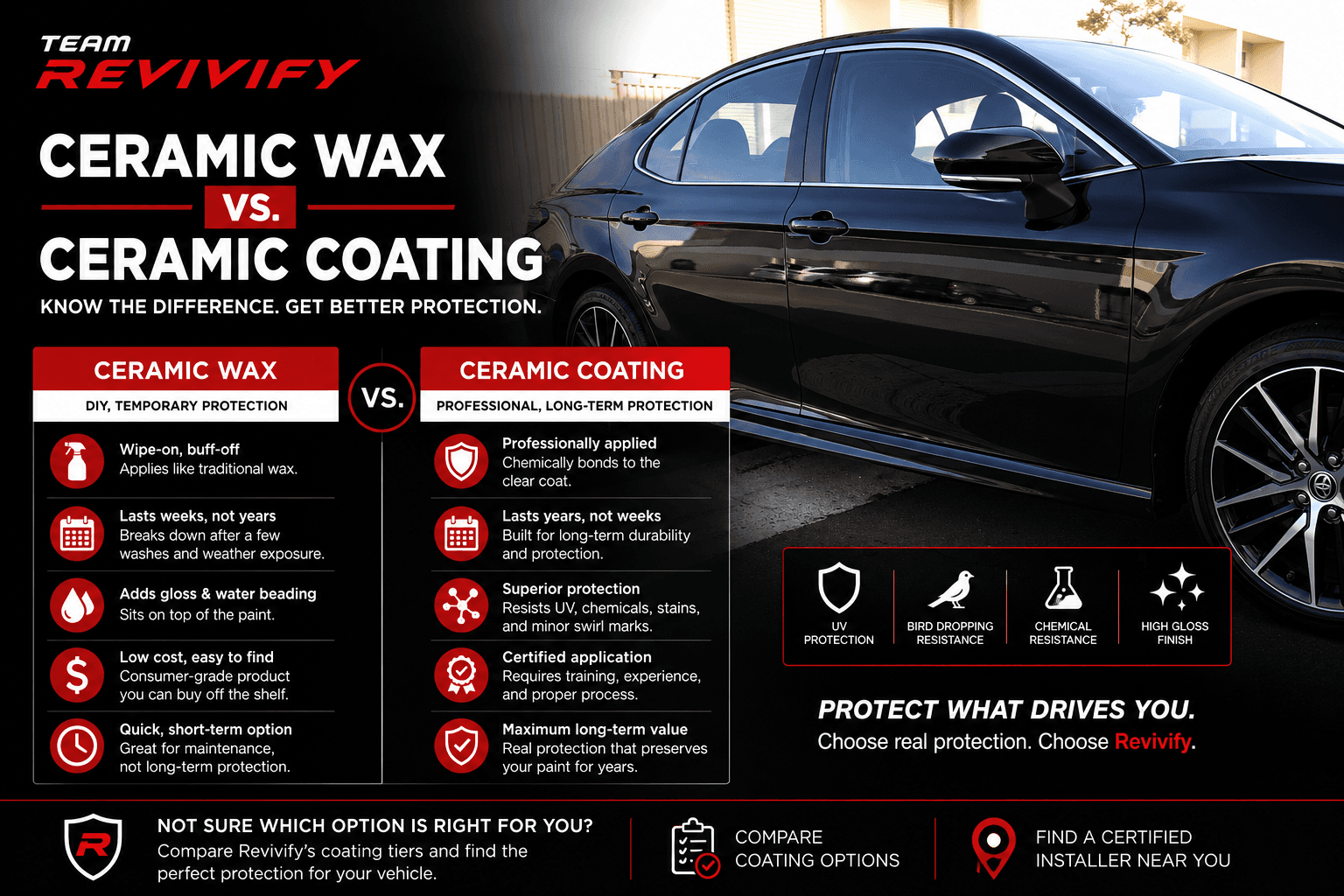
Ceramic wax vs. ceramic coating: the two names get used almost interchangeably in marketing, but they're not the same product, and the difference matters for how long your paint actually stays protected. Ceramic wax is a consumer-grade, spray-or-wipe product designed for easy DIY use. Ceramic coating is a professionally applied, chemically bonded layer built to last years. Confusing the two is exactly how buyers end up disappointed with results.
What Is "Ceramic Wax," Actually?
Ceramic wax is typically a traditional carnauba or synthetic wax formula with a small amount of SiO₂ (silica) added to the mix, then marketed under the "ceramic" name because that word sells (Jimbo's Detailing breaks down the chemistry). It goes on like a wax — wipe on, buff off — and adds temporary gloss and water beading. It does not chemically bond to the clear coat the way a real ceramic coating does.
Why Does Ceramic Wax Wear Off in Weeks, Not Years?
Because ceramic wax sits on top of the paint rather than bonding into it, it breaks down fast — typically within a few weeks to a couple of months, depending on washing frequency and weather exposure (real-world wax durability runs 2 to 6 weeks). A professionally applied ceramic coating, by contrast, is built to last years because the bond itself is different, not just because the ingredients sound similar.
Why Is Ceramic Wax Part of the Low-End Tier Problem?
Ceramic wax is a good example of exactly the low-end tier of "ceramic coating" product that makes the category confusing for consumers: cheap, easy to find, and marketed with the same language as a professional system, but nowhere close in performance or lifespan. If a shop or product is vague about whether you're getting a true bonded coating or a wax-based spray, that's worth asking about directly before paying for it. Our best ceramic coating for cars comparison sorts the tiers out.
Is Ceramic Wax Worth Using at All?
It has a place — as a quick, low-cost way to add gloss and water beading between washes, or for owners who aren't ready to invest in a full coating package. What it isn't is a substitute for professional-grade protection, and it shouldn't be marketed or purchased as one.
What Actually Delivers Long-Term Protection?
A coating like CarbonX, Ultra Pro, or SH Lite is chemically bonded during a certified application process, not wiped on at home — which is the entire reason it lasts years instead of weeks. Compare Revivify's coating tiers to see how they differ from a wax-based product, or read how a self-healing coating compares to a ceramic coating. When you're ready, find a certified installer near you.
FAQ
Is ceramic wax the same as ceramic coating?
No. Ceramic wax is a wax-based product with some silica added, applied like traditional wax. Ceramic coating chemically bonds to the clear coat and is professionally applied.
How long does ceramic wax last?
Typically a few weeks to a couple of months, depending on washing and weather — nowhere near the multi-year lifespan of a properly applied ceramic coating.
Can I apply ceramic wax myself?
Yes, that's exactly what it's designed for — a DIY, wipe-on product, unlike professional-grade coatings that require certified application.
Why is ceramic wax marketed with the word "ceramic" if it's not the same thing?
Because the word sells. It contains a small amount of the same silica-based chemistry, but the concentration and application method are entirely different from a bonded coating.
Should I use ceramic wax instead of getting a coating?
Only as a short-term, low-cost option. If you want protection that lasts years rather than weeks, a professionally applied coating is the only way to get there.
Sources
Find a certified Revivify installer near you
Self-healing protection backed by a multi-year, CARFAX-registered warranty — applied by trained, certified professionals.