
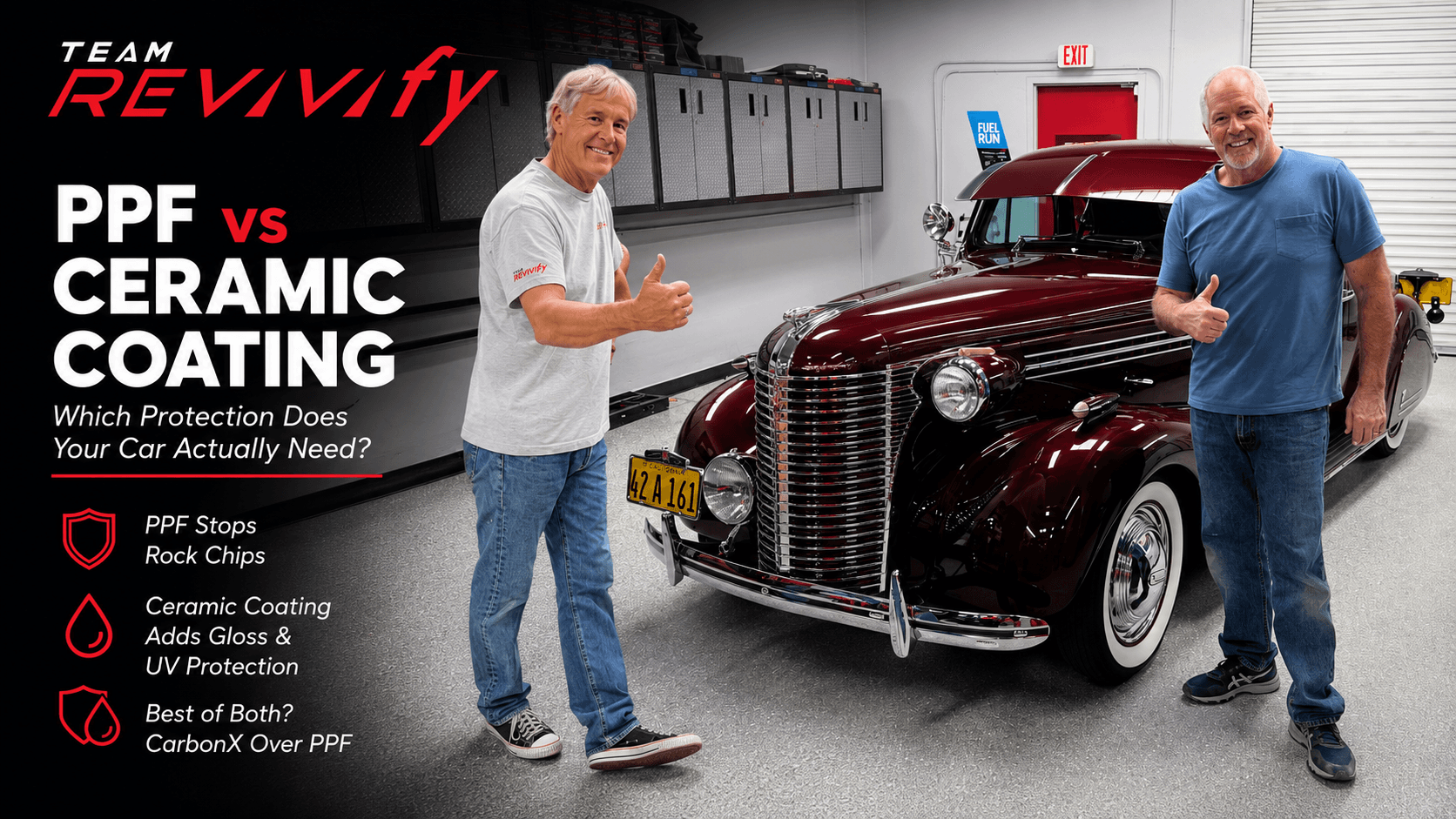
PPF vs. Ceramic Coating: Which Protection Is Right for Your Car?
PPF vs. ceramic coating comes down to two different jobs: PPF (paint protection film) is a physical layer that absorbs rock chips and abrasion, while ceramic coating is a chemical layer that adds gloss, hydrophobic slickness, and UV resistance. Most daily drivers don't need to choose one over the other — the real question is which one (or both) fits your car, your budget, and how you drive. For the side-by-side detail, see our full ceramic coating vs. PPF comparison.
What Does PPF Actually Do?
PPF is a thick, urethane film — typically 6 to 8 mils, per Avery Dennison's and STEK's published specs — applied to high-impact areas — front bumper, hood, mirrors, rocker panels — or the entire car. It's built to physically absorb rock chips, road debris, and minor abrasion. Higher-end PPF today, such as XPEL Ultimate Plus, includes self-healing topcoats that shrug off light swirl marks with heat exposure, closing the gap that used to separate film from coating. A professional PPF install is precise, labor-heavy work.
What Does Ceramic Coating Actually Do?
Traditional ceramic coating is a hard, glass-like SiO₂ layer that bonds to the clear coat. It doesn't stop rock chips, but it dramatically improves gloss, makes the surface easier to clean, and adds a UV and chemical barrier against bird droppings, tree sap, and road salt. The tradeoff with older-generation ceramics is rigidity — a hard shell can micro-crack over time instead of flexing with the paint.
This is where Revivify's coating line differs from a conventional ceramic. Instead of a rigid glass layer, Revivify's formulas — from SH Lite up through Ultra Pro and CarbonX — are engineered to stay flexible, so the coating moves with the panel instead of stressing at the edges, while still delivering the self-healing response ceramic coatings are known for. See self-healing coating vs. ceramic coating for the full breakdown.
So Which One Do You Need?
- High-mileage highway commuters or truck owners: PPF on the front end, coating everywhere else.
- Garage-kept weekend or show cars: Coating alone is often enough, since impact exposure is low and gloss/ease-of-cleaning matter more.
- Anyone who wants the best of both: CarbonX can be applied directly over PPF, adding self-healing gloss and an extra hydrophobic layer on top of the film's impact protection.
Cost is usually the deciding factor. Full-vehicle PPF costs significantly more than a coating package because of the labor-intensive film work — Kelley Blue Book puts full-car film at roughly $4,000 to $7,000 — while a coating gets you most of the everyday protection and shine at a fraction of the price. If budget is the main constraint, start with the installer locator to get a quote for your specific vehicle and region — pricing varies by panel count and paint condition.
Whichever direction you go, professional application matters more than the product itself. According to SGS testing standards used across the coatings industry, performance claims are only as reliable as the surface prep and application process behind them — which is why Revivify coatings are sold exclusively through certified applicators rather than as a DIY product.
FAQ
Can I put ceramic coating over PPF?
Yes. Coating over film is common and adds extra gloss and hydrophobic protection while the film absorbs physical impact underneath.
Which lasts longer, PPF or ceramic coating?
Quality PPF is typically rated over a longer service life than an entry-level coating, but Revivify's CarbonX is formulated for extended durability when properly maintained, closing much of that gap.
Is ceramic coating a replacement for PPF?
No — coating won't stop a rock chip. Think of PPF as armor and coating as a shield against chemicals, UV, and staining.
Do I need both PPF and ceramic coating?
Not always. It depends on how you drive and where. High-mileage or highway-heavy drivers benefit most from combining both.
Where can I get PPF and ceramic coating installed correctly?
Use the Revivify installer locator to find a certified applicator near you — application quality significantly affects how either product performs.
Not sure which protection fits your car? Find a certified Revivify installer near you for a free consultation.
Sources
Find a certified Revivify installer near you
Self-healing protection backed by a multi-year, CARFAX-registered warranty — applied by trained, certified professionals.